Feeds:
Posts
Comments

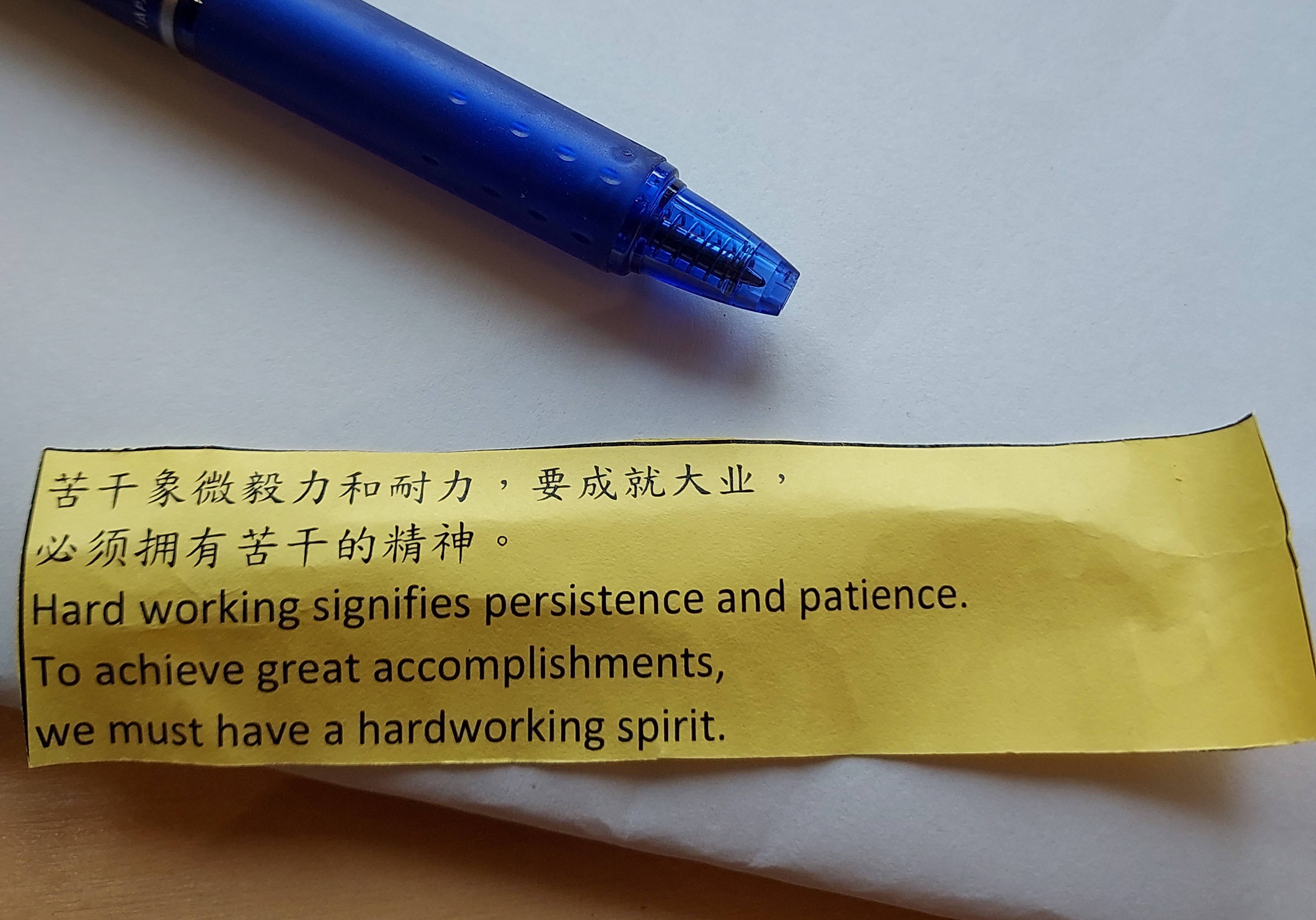
Patience is reacting with understanding and composure when circumstances, good or bad, are encountered neither fighting adverse conditions nor attaching to those that are enjoyable.

Patience is the ability to accept discomfort remain unperturbed in the face of obstacles and steadfast in the pursuit of a goal.

Patience fosters humility by enabling us to calmly view ourselves is relation to what we are undergoing overcomes opposition and fosters confidence.

It enables us to counter anger, act with restraint, recognize and overcome our shortcomings to respond wisely in the face of adversity, to stop blaming others for our problems to interact harmoniously, and to stay with a difficult undertaking without complaint or disappointment.

Born of calm understanding and absent of resentment, patience helps us to refrain from anger when others harm, or merely inconvenience, us. It is to endure in the face of afflictions and sufferings.

Coupled with perseverance, patience enables us to remain focused on our vow to end suffering and attain lasting happiness.

Venerable Wuling

http://www.abuddhistperspective.org/

I am so happy that finally I have arrived to the decision of how I want to walk the Dharma path. After much examinations, observations, investigation and experiencing the Dharma with the monks, nuns, the animals and the ordinary people, the pali canon text is still of importance to me. It represents the core values of the Buddha’s teachings that no one should ever forsake. It helps me identify the true qualities of a sincere practitioner which includes the monks and nuns. The true qualities for those who aspire to be a Buddha as well as those who want to be happy throughout their lives and also to bring happiness to others. Meditation plays a crucial role in practising the Dharma. It is definitely not an act of selfishness. Its calmness not only helps ourselves to better restrain our bad habits but also bring a cheerful outlook towards others. And everyone should make an effort to read and understand the pali canon text. To put into practise is the best way to understand the text.

Before entering the Mahayana tradition, I would suggest that everyone understand the core teachings from the Theravada tradition so as to better glimpse on what Buddha was trying to teach. In the Jakata tales, Bodhisattva was mentioned many times. Therefore, the practice of the Bodhisattva path does exist. In fact, it is reflected in the pali canon text as there is no difference on the 4 noble truth, 4 establishment of mindfulness, 37 factors of enlightenment etc…

No one should deny the existence of an Arahat today. As for the Bodhisattva path, it should be practised with actions. With lots of actions. The knowledge that we gained from the Buddha’s teachings and applying to our daily activities. And there should be no restrictions on applying the Buddha’s teachings, be it be when we are dealing with humans or non-humans. Buddha nature! I see Buddha nature in every sentient being. They are precious to me. This life they may exist as a non-human. Next life, they can be reborn in heaven as well as in the human realm. Therefore, we must treat everyone equally precious not just only humans that we care for or only want to help them. But to always keep thinking that, next life when this non-human could be reborn as a human and with the karma connection, we will meet again. WIth good affinity, we are able to influence them with the Dharma and eventually lead them to liberate themselves. We cannot view only what happens in this lifetime but many lifetimes to come as long as we do not allow ourselves to fall.

Wisdom and emotion. We cannot always use wisdom to deal with every situation. In today’s society, being emotionally involved allows us to help and understand others better. Using wisdom to guide our emotion is the best way to defend ourselves. Using wisdom to help others may not be effective. Middle path. Finally, I have understood what Buddha meant by middle path but not in a theoretical way. Middle path is not easy to act upon!:)

Lastly, monks, nuns, lay practitioners or ordinary being or even animals, we are of no difference as long as we truly understand what Buddha nature means. No lay practitioners should feel inferior nor those who have renounced should feel superior. Afflictions, defilements and attachments, we all have them. We all make the same mistakes and repeat the same mistakes again and again.

With sincere and diligent practise, faith arise. Faith should not arise only when we believe in a certain Buddha. Consistency in practising should.

Conclusion
The pali canon shall guide me in my values and my actions will follow the Bodhisattva way. As for the destination, the understanding of the Buddha’s teachings and the practice of the Bodhisattva way shall lead me to where I aspire to be .

Compassion is the wish and intention to alleviate the suffering of others.

It is the unconditional care and concern for all beings. The ability to realise that all beings experience distress.

Not just ourselves or those we care for. It arises from selfishness is relinquished and even the suffering of wrong doers is seen as clearly as our own.

Born of wisdom not emotions, compassion knows no boundaries, it makes no exception. Flowing from the true nature,  compassion knows no bitterness and does not judge.

It expect nothing in return. And while love based on emotions may change to hatred, compassion arising from wisdom will never change. Free of attachment and expectation, compassion is not deterred by others’ actions nor does it not wane in the face of slander or jealousy. 

Encountering fear and grief, sadness or confusion, compassion can help heal. When there is compassion helping others reduce their suffering is not a burden. It is a joy. With compassion we can transform our lives, we can change the world.

Venerable Wuling

http://www.abuddhistperspective.org/abuddhistperspective/2021/3/17/reflections-on-compassion.html

We believe Yellow’s underdeveloped left eye was due to malnutrition since the day she was born or maybe she was already like that when she was in her mummy’s womb. She wasn’t well taken care of but yet survive through the harsh environment. She was bearly six-months-old when she was heavily pregnant eight years ago. We couldn’t bring ourselves to abort her kittens. As buddhists, we try to keep our precepts by not causing harm to others and commit killing.

We put her on boarding till she gave birth. Four kittens and one of the them was my beloved Vanilla.

Yellow

Her eye looks really bad. Dr Heng did the surgery on 23 March. We sent her removed eyeball to the lap for further examination and it was lymphoma.

We are glad that it hadn’t spread to other parts of her body. She is eating well and active.

I am giving her TCM supplement to boost her immune system. I have lost too many cats lately… and I am not ok… So Yellow and the rest, please stay strong and healthy!

DN 16 Mahaparinibbana Sutta

2.26 ‘Therefore, Ananda, you should live as islands unto yourselves, being your own refuge, with no one else as your refuge, with the Dhamma as an island, with the Dhamma as your refuge, with no other refuge. And how does a monk live as an island unto himself, …with no other refuge? Here, Ananda, a monk abides contemplating the body as body, earnestly, clearly aware, mindful and having put away all hankering and fretting for the world, and likewise with regards to feelings, mind and mind-objects. That, Ananda, is how a monk lives as an island unto himself,… with no other refuge. And those who now in my time or afterwards live thus, they will become the highest, if they are desirous of learning.’

3.48 Ananda, have I not told you before: All those things that are dear and pleasant to us must suffer change, separation and alteration? So how could this be possible? Whatever is born, become, compounded, is liable to decay – that it should not decay is impossible.

3.51 Thus the Lord spoke. The well-Farer having thus spoken, the Teacher said this: ‘Ripe I am in years. My life-span’s determined. Now I go from you, having made myself my refuge. Monks, be untiring, mindful, disciplined, Guarding your minds with well-collected thought. He who, tireless, keeps to law and discipline, Leaving birth behind will put an end to woe.’

4.43 Then the Lord, having settled this matter, at that time uttered this verse: ‘By giving,  merit grows, by restraint, hatred’s checked. He who’s skilled bandons evil things. As greed, hate and folly wane, Nibbana’s gained.’

5.8 Ananda, there are four places the sight of which should arouse emotion in the faithful. Which are they? “Here the Tathagata was born” is the first. “Here the Tathagata attained supreme enlightenment” is the second. “Here the Tathagata set in motion the Wheel of Dhamma” is the third. “Here the Tathagata attained the Nibbana-element without remainder” is the fourth.

5.27 In whatever Dhamma and discipline the Noble Eightfold Path is not found, no ascetic is found of the first, the second, the third or the fourth grade. But such ascetics can be found, of the first, second, third and fourth grade in a Dhamma and discipline where the Noble Eightfold Path is found.

***From what I know today, Ajahn Brahm has attained the third jhana like what the Buddha taught. As long as a Bhikkhu or Bhikkhuni or even a lay practitioner who has attained the jhanas, I would say Buddha’s “traditional” teachings is still valid and attainable by many. To walk the path of Theravada traditions, one needs to be really very hardworking.