Feeds:
Posts
Comments

Archive for the ‘The learning experience…’ Category

Many years ago, I’ve learnt that the production of palm oil has destroyed the habitat of the wildlife and cause suffering to them, I’ve stopped consuming it. I recall seeing an image in social media that an orangutan was trying to protect its home by fighting against a machine that was uprooting a tree. It was heart wrenching. Whenever I see palm oil ingredient listed in a product, I would not buy it. This narrowed my choice of food.

Just a week ago, I’ve come across a documentary that talks about sustainable palm oil. It feels good knowing how this group of people are making profit yet protecting wildlife and habitats, ending deforestation and being fair to the workers. On one side of the land, there are palm tree plantations and on the other side, they have restored the forests that had been destroyed while profiting from palm oil. It’s not an easy task but they did it!

Logo

Above picture is the RSPO logo. However, I didn’t seem to find any product here that comes with this logo. Perhaps I’m a vegan which again narrowed down the choices of food and that’s why I didn’t get to see it.

From the documentary, it says that only 20% of the production of palm oil is sustainable. I hope in the near future, more companies would support RSPO and make the world a better place for the wildlife. It’s a joy to see people are beginning to be aware the impact we’ve done to the environment and animals.

Read Full Post »

If you’ve wondered how helping the animals could help me progress in the Dhamma practice, I shall now explain to you.

When I first lost a cat, it took me a month to get over it and when I lost yet another cat, the number of days of suffering reduces. I lost yet another and another and from one month of suffering to two weeks and from two weeks to seven days, four days, three days and eventually one day and sometimes I do not even feel anything but the love is always there. Yes, pain is inevitable, suffering is optional.

All illnesses that a cat has is the same as humans. It allows me to understand the pain and suffering of both humans and non-humans. And whenever I am sick, fall down or experience unpleasant feelings, the first thing that comes to my mind is to wish such pain would not happen to any living beings, humans and non-humans.

I see the Four Noble Truths in them every day, which is a lot to reflect already, especially cause and condition.

Practising loving kindness can be applied in helping both humans and non-humans since all experience suffering.

My rescues at home trained my patience and make me a better practitioner because they constantly remind me of my habits and when the habits had been overcome, I didn’t even notice them.

I’ve learnt to smile the first thing I get up in the morning until it becomes a habit even when I don’t see them.

Whenever I heard humans screaming or unusual calling from a cat or dog and even rats or birds, or any unfamiliar sounds that arouse danger, the first thing that comes to my mind is save! Not fear but to save!

All these do not happen overnight and require gradual training. They are virtuous acts that helps in concentration. It is definitely not the end of training.

I am not surrounded by people who are constantly practising an equanimous mind. For the readers who think animal rescue work cannot help progress in our daily Dhamma practice, you have come to the wrong site.

I humbly admitted my shortcomings because I am aware of them and not denying them. Do not judge my shortcomings and if you must, at least get to know the conditions behind. To criticise an unenlightened being for clinging to the Dhamma is not appropriate. I’ve never worried about not letting go of this or that for I have understood with the consistency of practising the Dhamma, the maturity of letting go would arise eventually. Therefore, do not let it bother you. Everything requires time to progress. That’s why it is called the stream, leading towards Nibbāna. I can’t force myself to be who I am not or what others expect of me.

To those who are sensitive to my experience or comments, I apologise. There are comments that cannot be applied to the monastic sangha. If acknowledging my shortcomings, humbling myself and explaining the differences between living as a monastic and lay person cannot bridge the gap, I really would prefer a quiet life.

There is not one day that I have not appreciated those who guide, teach and help me, including those who have and had contributed to my rescues and all the feeders as well.

Have faith in the Buddha’s teaching!

Read Full Post »

I’ve been looking for a teacher to validate my practice and finally I found one. She is Ayya Khema. The meditation experiences I had, aligned with her experience. When I first read her book “ The Path to Peace”, they were familiar. I went on reading another book “Know Where You’re Going” and whatever meditation experience she mentioned inside the book, all were familiar to me. I leapt with joy and told Mel that I think I finally found my teacher…

I can’t teach Dhamma and the only way to keep or preserve the Buddha’s teachings which I wish I could play a part too, is to share this book, her experience and information to whoever who wants validation, study and meditate.

16 copies arrived today and I had already received 14 copies two weeks ago. There’ll be 30 copies arriving by next week and more…

I asked Mel if I should wait till next week when the books arrived so that I can deliver to two different buddhist centers or should I deliver to Buddhist Fellowship first this Saturday. She said we’ll never know what happen tomorrow and it’s best to deliver this Saturday. I totally agree with her.

Ayya Khema may not be around anymore. I felt that such good teachings should not disappear and should be shared and carried on for a long time. Not everyone can explain the Jhanas in details. Ayya Khema did it very well. I am fortunate to have come across her teachings.

I will call other buddhist centers tomorrow to check if I can leave copies in their centers. There are a few centers in my mind and I may need help from the volunteers who are helping out in the center as well.

I am aiming at a hundred copies to be distributed for now. If the centers allow more copies, I would not hesitate to bring in more, even if it means a few more hundreds copies which I hope it will happen. All I want is to benefit the people. I hope to make life easy for the lay practitioners who always have trouble trying to understand their experiences.

I am currently reading another book “Being nobody, going nowhere” also by Ayya Khema and with Ayya Khema, I end my search for the right teacher!

May Ayya Khema’s teaching spread not only in Germany but all around the world.

Read Full Post »

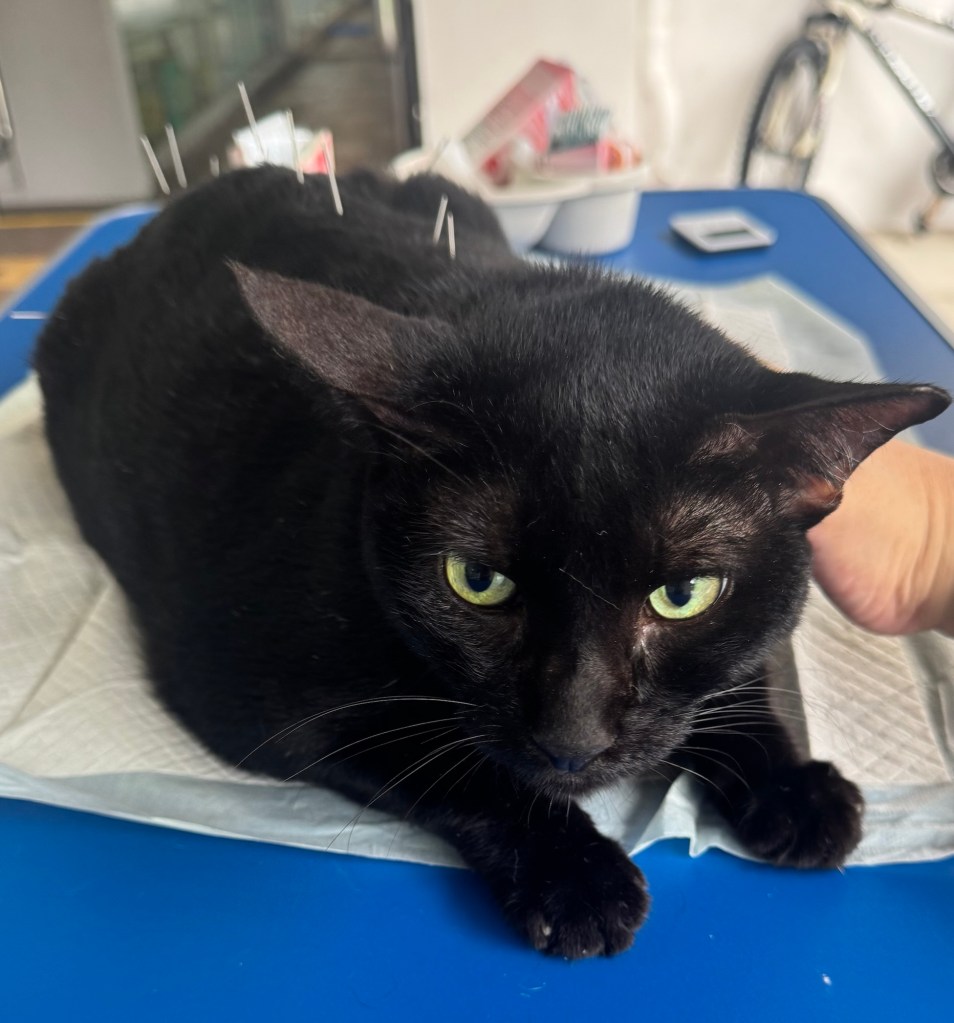
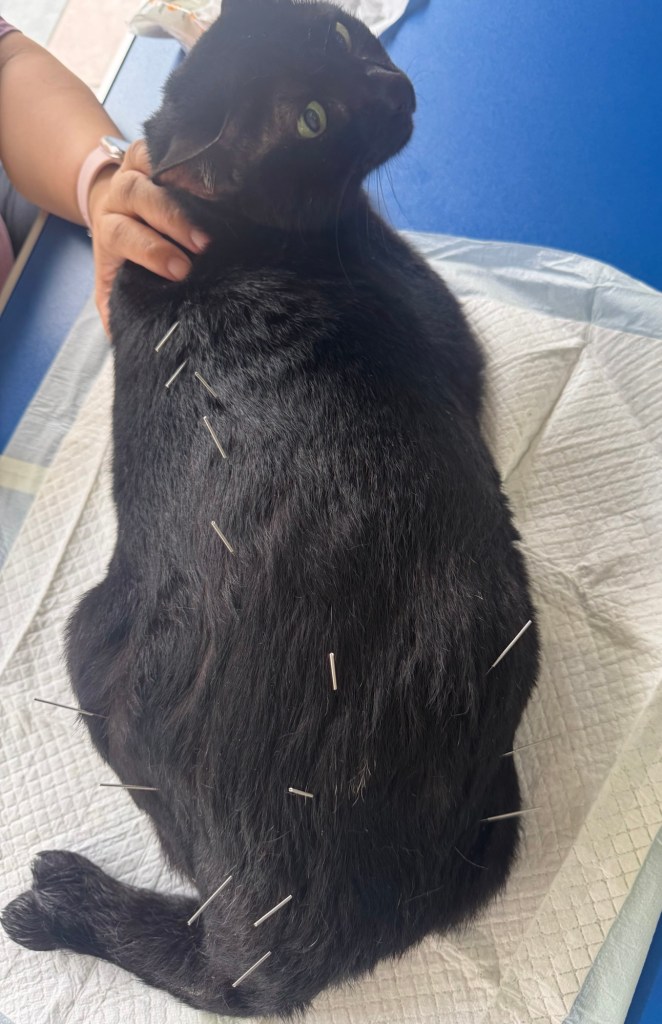
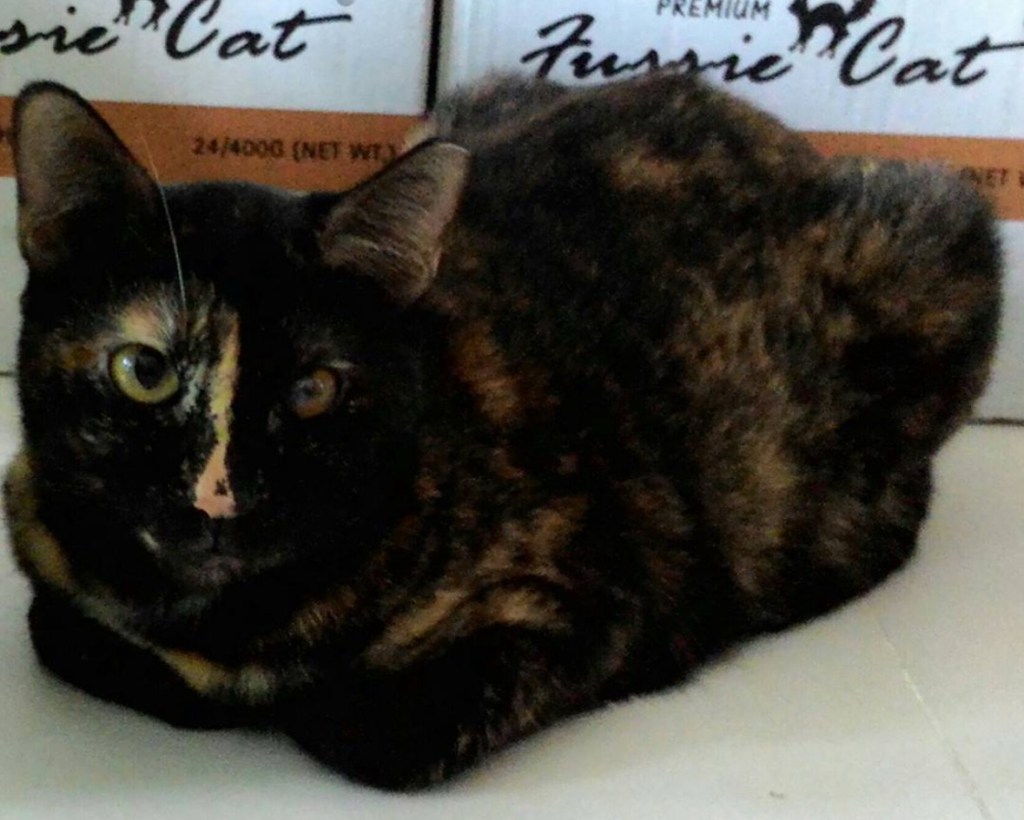
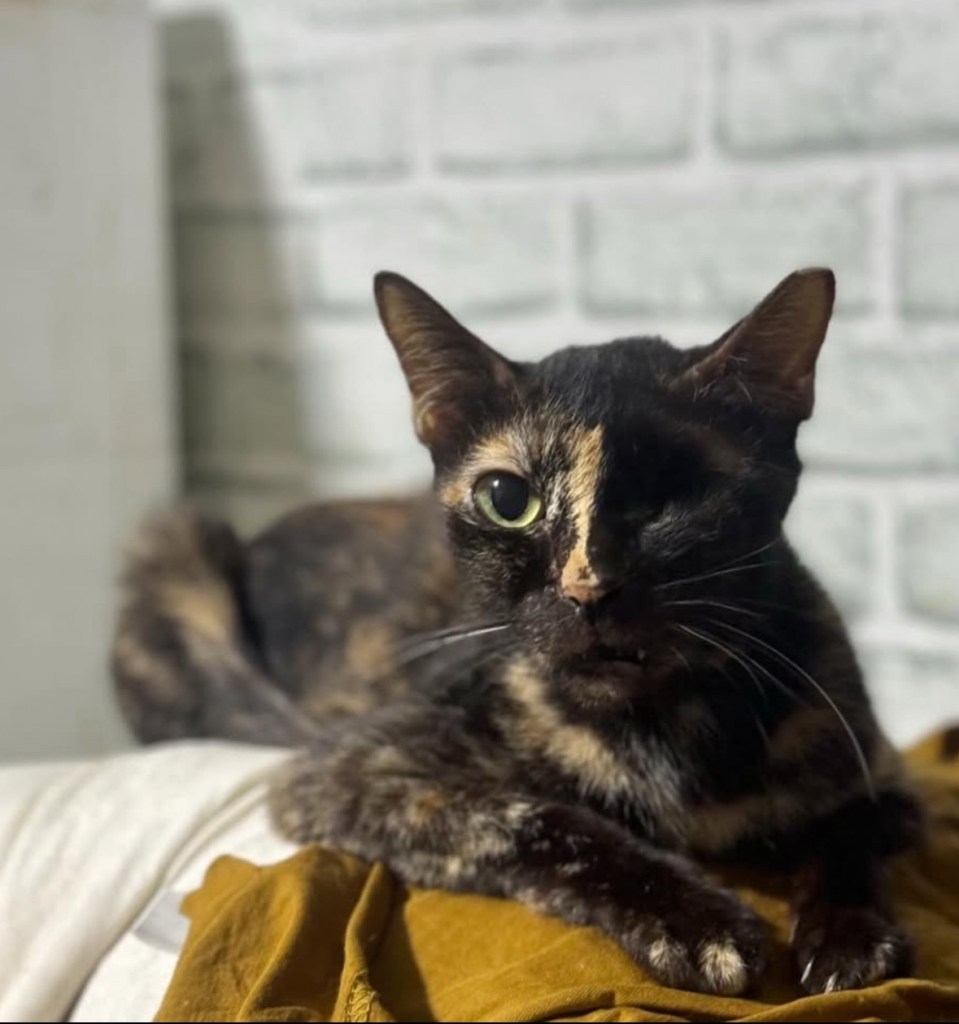
慈辉 left with an asthma attack on 2 February and 小黑 with cancer spread to her lungs on 3 February. Both saw each other everyday at Hougang and kept a distance. When they were both brought home on the last day of 2022, they still couldn’t see eye to eye:).

Mel took care of them. When Mel was on holiday, I would cat sit all the cats. 小黑’s appetite was amazing. 慈辉 was a fussy cat. When she was abandoned, she was already coughing. She already had a chronic issue. We brought her to the vet shortly after we took her home. Gave her medicine and supplements but nothing helped. For her, things happened so fast. She was so perfect and the next day the asthma attack simply took her away. We sent her to the clinic and provided her with oxygen therapy… even when she was home…

小黑 was a tough cat. She was already weak and yet she still hang on for more than a week. It’s was so hard for us to watch. GABA was given to her to relieve her pain and to calm her down.

慈辉
小黑

Both of them were well taken care of even when they were community cats. In March 2021, myself and another feeder shared the vet cost to sent 小黑 for tooth extraction since she was drooling terribly. She was released when she was fit. 慈辉 was well taken care by a young couple who loved her dearly. She was given treats almost everyday. After they had their meal, I would still leave food for them for the rest of the night. Same thing goes to all community cats that I’m feeding.

Both were cremated side by side. Hope if they meet again, they’ll live in harmony:).

May the merits accumulated be dedicated to their favourable rebirth.

Read Full Post »

When one has understood the Dhamma, one has seen impermanence, non-self and suffering. Doubt in the Buddha’s teaching is gone, perceiving of a self is gone and no longer participate in practice based on tradition that is not found in the Buddha’s teaching.

When the Four Noble Truths have been penetrated into one’s mind, there is nothing we see in life that is separated from Dhamma. Having understood cause and conditions, it’s like surrendering ourselves to what’s happening. We will not feel repulsive when something unexpected happens and naturally, Dhamma will be used to deal with all situations. That’s the path!

Does having fully understood the Dhamma bring happiness? I wouldn’t think so. However, when we use Dhamma to deal with everyday situation, I would say it brings great meaning and joy to it and Dhamma is useful and alive. Happiness? No, I am in pain most of the time, perhaps due to impermanence and experiencing the sufferings of all sentient beings.

I remember a monk once said, when one is painfully threading the “Dhamma” path, one is in the wrong path. I would say when one is painful threading the “Dhamma” path, doesn’t gain insights, doesn’t make progress in accordance with the Buddha’s teaching, one is in a wrong path.

In AN4.163, the Buddha spoke about having pleasant practice with swift insight, pleasant practice with slow insight, unpleasant practice with swift insight and unpleasant practice with slow insight. I guess I belong to the path of unpleasant practice with slow insight. Doesn’t matter if it’s superior or inferior as long as I arrive at the right destination.

Anger. The Buddha’s teaching is beautiful. In a sutta, Buddha said that when one practises loving-kindness, it is not possible for one to have ill will. Anger does not necesarily come with ill will. When loving-kindness, compassion and altruistic joy is practised well enough, there will be completely no room for ill will to arise (AN6.13). How could one with a mind filled with loving kindness and also experience sufferings have bad wishes for others? This is not possible. Altruistic joy is effortless and seems easy but, only with practising loving kindness and non-ill will can genuine altruistic joy arise. There is no short cut to it. To be aware of anger is good. To be able to restrain from speech and action arise from anger is also a good practice to me for now. I have to love myself in order to carry on practising the Dhamma. Anger still arises. At times, equanimity takes over, at other times it doesn’t. It’s ok.

I can’t explain sensual desire much. I can live with it and I can live without it. I can have a chocolate I love and I can live without having it as well.

Lust for form and lust for formless… I didn’t pay much attention on these.

Here comes conceit and restlessness. Ever since I’ve understood the Dhamma as a whole, I began to have a feeling of sadness and pain. Such feelings did not obstruct my concentration during meditation. I’m able to handle the five hindrances well, mainly because I’m always curious about how Buddha made his way into deep and profound concentration and insights. Therefore, I work very hard and used all methods to try and understand the Buddha. Light is an obstruction. Stop chasing it. Seeing form is an obstruction, don’t concentrate on that. Don’t rely on chanting or music. No insight will arise. When the Buddha said be mindful of our body, feelings, mind and phenomena, he meant it! Anything outside his teachings, it’s a wrong path. In fact, when one is already in the stream (not known by the practitioners yet), even the initiation of a vision of a Buddha could lead you to an equanimous mind instead of the vision of the Buddha. This only tells me that we are never in control. When you are in the stream, you are in the stream!

Due to the consistent reminder of the Dhamma, the sadness, I began to wonder why is this keep repeating and repeating in my mind and one day, out of no where, the fetter of restlessness came to my mind and I began to realise that’s the fetter that Buddha had been saying. At the same time, I also realised how closely conceit and restlessness are related. Buddha was beyond excellent! Anger, sadness, pain, these belong to a restless mind outside meditation that requires more effort to deal with.

Despite having penetrated the understanding of non-self, comes a big word “conceit”! I have never thought of all the fetters much, neither am I interested in attaining this or that. I simply follow what the Buddha taught. I guess, when the condition is right, insight for that moment of practice pops up. When it does, it’s telling you what should be done, allowing us to be more aware of the situation.

Right now, the eradication of the conceit “I” and the removal of restlessness fetter seems a long and tedious journey. Something that I can’t see that it would happen this lifetime. However, I can always practise restraining myself, be mindful and paying careful attention to the best that I can and set a strong foundation so that I will not flinch again when I experience another level of absorption.

In a sutta (SN17.23), Buddha said a monastic must follow an example of a well trained monastic and a lay follower must follow an example of a well trained lay follower. Very true indeed. I can’t understand the cultivation and progression of a monastic. And the monastic cannot understand the training of a lay practitioner except the Buddha!

In AN7.53, Venerable Sariputra praised a female lay follower, Nandamātā, for practising well and this gives me so much encouragement and comfort. It touched me so much as I see the generosity of Venerable Sariputra which seem to be lacking these days.

With the understanding of the fetters, conceit and restlessness, I have also come to understand those, especially the monastic, who haven’t gotten rid of the conceit fetter.

The Buddha said “dwell with yourselves as an island, with yourselves as a refuge, with no other refuge; with the Dhamma as an island, with the Dhamma as a refuge, with no other refuge (SN 22.43).’ It’ll save us a lot of time and effort when we heed his advice. It’s always peaceful when we rely ourselves as an island, as a refuge, rely on the Dhamma as an island, as a refuge… Praise the Buddha!

Read Full Post »

« Newer Posts - Older Posts »